Spray Tan Before and After: Shades, Levels and Real Results
By Natalie, Intansify tanning artist · 9+ years of mobile tanning in LA
A good spray tan before and after doesn't look like a transformation — it looks like the same person after two great weeks of vacation. That's the standard we mix to at every appointment: color that reads as natural rather than applied. This article explains how that result is built — how levels and shades get chosen, what changes hour by hour after a session, and why the professional version is hard to replicate from a bottle.
Spray Tan Levels, Explained
Spray tan levels describe how deep the final color goes, and they're controlled mainly by the strength of the solution — roughly, level 1 is a subtle sun-kissed lift, level 2 is a believable beach week, and level 3 is a deep bronze for events and stage lighting. A skilled artist picks your level from your starting skin tone and the occasion rather than from "as dark as possible."
The active ingredient in every professional solution is a sugar-derived compound that darkens the outermost layer of skin, and the strength of the mix sets how far it goes. A stronger mix means deeper color, but only up to what your skin can believably carry: sprayed on porcelain skin, a level 3 reads as a costume rather than a tan. That's why we treat levels as a ceiling set by your natural coloring. Fair clients usually live at level 1–2, medium and olive skin at 2–3, and deeper skin tones often want less depth and more glow — an evening-out and warmth rather than dramatic darkening. The full chemistry, from spray to development, is laid out in our explainer on what a spray tan is and how it works.
What Real Before-and-After Photos Show
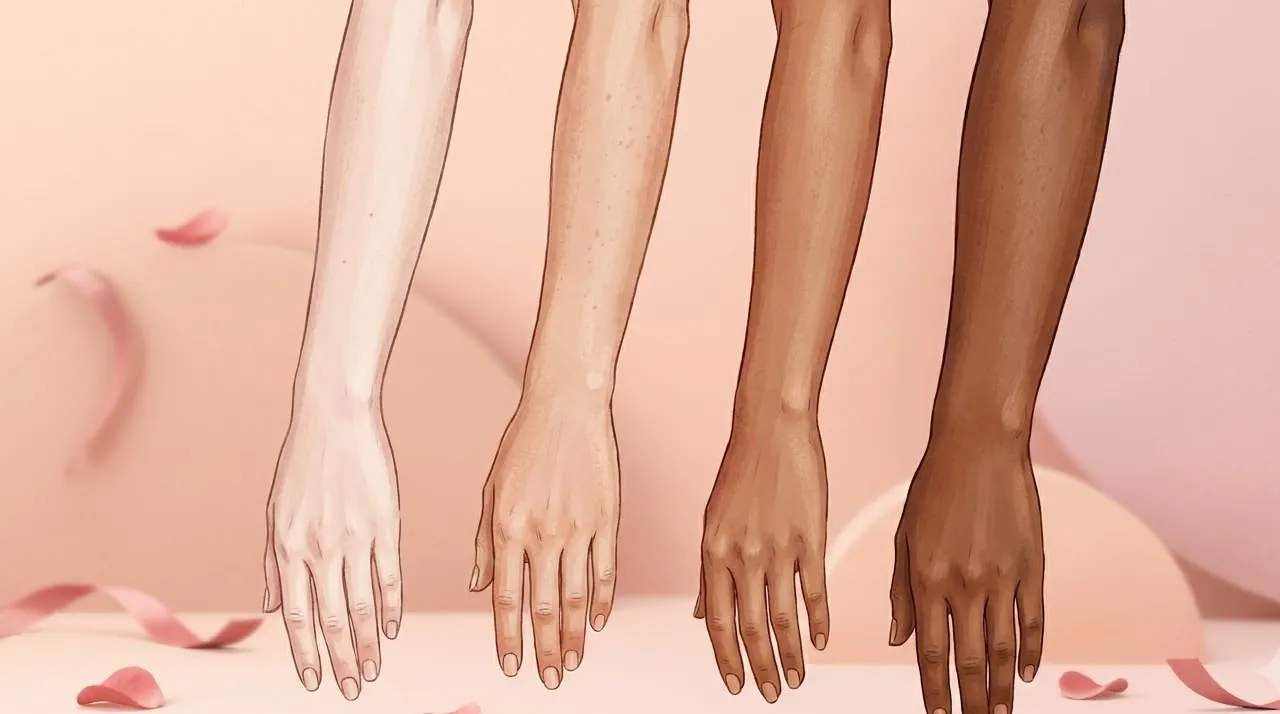
Look closely at an honest pair of photos and you'll see three things: even color across tricky zones (ankles, elbows, hands), a natural gradient at the hairline and jaw, and undertones that match the client's own coloring. What you won't see is orange — nine-plus years of LA appointments have convinced us orange is not a spray tan problem, it's a wrong-shade-for-that-skin problem, and we took that argument apart in full in the glow nobody clocks as fake.
That shade logic produces a narrow, predictable range — fair complexions taken one gentle level up, olive skin in a rich level 2, event looks in a deliberate level 3 — and in every believable "after," the person still looks like the "before," just warmer. The everyday test matters more than any studio shot: good color should hold up in a hallway mirror under ordinary lighting, not only in a flattering frame. When you browse any before-and-after set, pay attention to starting tones that resemble yours; that's a far better predictor of your own result than the most dramatic pair on the page.
Airbrush Spray Tan Before and After: The First 24 Hours
The change unfolds in stages: right after the session you see the cosmetic bronzer (a preview, darker and warmer than your final color), by hour 8–12 the real tan has developed underneath, and after your first rinse the bronzer washes away to reveal the finished result. Day-one-morning panic — "it's too dark!" — is almost always just the bronzer doing its job.
A true airbrush spray tan before and after comparison really needs three photos rather than two: bare skin, the bronzer stage, and the settled color after the first shower. Clients who skip that mental model sometimes judge the tan at the wrong moment. Here's the realistic timeline we walk every first-timer through. Hour 0: sprayed, dry to the touch, wearing loose dark clothes. Hours 1–8: bronzer stage — avoid water, sweat, and tight waistbands. Hours 8–12: first rinse, water runs tan (just the bronzer washing off), color underneath looks lighter and more natural. Hours 12–24: the color finishes deepening slightly, and what you see on the evening of day one is your true shade — the "after" worth photographing.
Can You Airbrush Tan Yourself?
Technically yes — handheld kits and self-tanning products exist, and for touch-ups between sessions they're genuinely useful. But matching a professional result on your whole body, alone, is another matter: you're aiming a spray gun at your own back, judging color depth in bathroom lighting, and blending shade transitions you physically can't see.
So when clients ask us — can you airbrush tan yourself and expect gallery-quality results? — our answer is: for a forearm, sure; for a full body before an event, we wouldn't risk it, and we say that as people who could do it and still book each other instead. The machine matters far less than the eyes and the mixing. An artist sees your undertone in proper light, mixes a custom shade rather than accepting a bottle's default, adjusts depth zone by zone (faces and hands want less product than legs), and works fast enough that nothing dries mid-blend. DIY misses show up in predictable places: dark knuckles, streaked shoulder blades, a jawline where the face shade argues with the neck. If they happen, our fade-and-fix advice is gentle exfoliation and patience — and next time, a 30-minute house call from $80 depending on location.
How We Choose Your Shade at an Appointment
We match three variables before mixing: your undertone (cool, neutral, or warm), your starting depth, and your occasion — then we mix a custom solution rather than choosing from fixed spray tan colors on a shelf. The mix takes two minutes and makes more difference than any other step.
Undertone decides whether your solution leans golden or neutral; getting this wrong is where oranges and grays come from. The working rules our artist mixes by: fair skin with cool undertones gets either a violet-balanced base to neutralize brassiness or a warm bronze that keeps it from going flat — a per-client call, not a formula; olive skin takes a golden base that amplifies its built-in warmth, and deep skin tones call for rich, warm depth that evens and enhances rather than trying to dramatically darken. Starting depth sets the level ceiling we described above. Occasion fine-tunes it: cameras and stage lights wash out roughly a half-level of color, so wedding and shoot clients get mixed slightly deeper than everyday clients. Picture two clients booking the same week: one fair with pink undertones, tanning for a Friday dinner, and one olive-skinned, tanning for a Saturday beach shoot. The first gets a violet-balanced level 1 mix that reads as a warm glow by candlelight; the second gets a golden level 2.5 that will survive midday sun on camera. Same equipment, same artist, completely different formulas — that's the part a fixed-shade booth can't do. This is also the appointment where you should talk — bring a photo of a past tan you loved, or of the sunless tanning before and after results you're hoping for, and we'll translate it into a formula. Custom mixing is the heart of how our custom color matching works, and it's the single biggest reason our results don't look sprayed on.
What to Look For, Then Book Your Own After
Seeing spray tan shades in context beats any description: work out which starting tone above is closest to yours, and you'll know roughly what to expect. Then it's a 30-minute appointment at your home, office, or hotel with our mobile spray tan service in LA — from $80 personal, $135 couples, $60 per person for groups of three or more, depending on location.
Our 40+ five-star Yelp reviews describe the kind of afters that don't need explaining. Book through the booking form or call or text (818) 856-5769, and set up the before and after you'll be comparing everything else to.
Please note that our map is approximate, please contact us for the exact info and pricing. All area prices are approximate. Please contact us for the exact pricing. We provide mobile tanning services in all major LA areas:
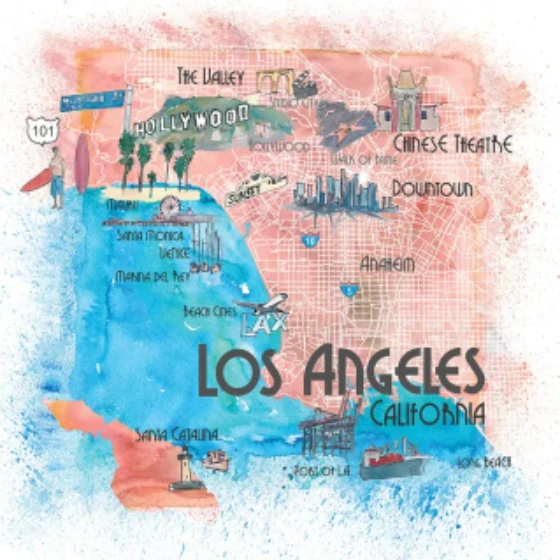
Please note that our map is approximate, please contact us for the exact info and pricing. All area prices are approximate. Please contact us for the exact pricing. We provide mobile tanning services in all major LA areas:
- Beverly Hills
- Beverly wood
- Calabasas
- Culver City
- Malibu
- Marina del Rey
- Miracle mile
- Pacific Palisades
- Santa Monica
- Sherman Oaks
- Studio City
- Venice
- Bel Air
- Brentwood
- Hollywood
- West Hollywood
- Mar Vista
- Pico — Robertson
- Westwood