Is Spray Tanning Safe? The Facts Without the Fear
By Natalie, Intansify tanning artist · 9+ years of mobile tanning in LA
Is spray tanning safe? On the skin, the dermatology sources we checked find no evidence of harm at the strengths used in tanning solutions, and they treat it as a far better option than a tan from the sun or a bed. The open question is the spray itself: US health authorities allow the color-producing ingredient for external use on skin, but not around the eyes, lips or the inside of the nose and mouth, and they have not approved it as an all-over booth mist. So the practical answer is to protect your eyes, nose and lips during the face pass, and to ask your doctor first if you are pregnant, have asthma, or are managing a skin condition. We make color, not medical calls. Below is what each source actually says, with links, so you can read them yourself.
TL;DR
Key takeaways
- The color is a reaction in the dead outer layer of skin and fades as that layer sheds, in about 5 to 10 days.
- No UV is involved, and the tan gives little to no sun protection: sunscreen stays in your routine.
- The unresolved part is breathing in the mist or getting it in your eyes, nose or mouth. Ask for protection.
- Reactions are uncommon but documented. A patch test and a look at the ingredient list come first.
- Pregnant, asthmatic, or managing a flare? That question goes to your doctor before it comes to us.
What Dermatology and Health Sources Say
We read the medical pages Google itself leans on for this question, plus two recent peer-reviewed reviews. Here is what each one says, in plain words.
| Question | What the source says | Source |
|---|---|---|
| Where does the color happen? | The reaction involves only the outermost, dead cell layer of the skin | Skin Cancer Foundation |
| Is it toxic on skin? | No evidence to date of toxicity at the concentrations currently used | Skin Cancer Foundation |
| Has any study shown harm? | A 2026 systematic review of 16 studies found none, but most studies were low quality, and free-radical questions remain open | Laferté et al., J Cutan Med Surg, 2026 |
| What about lab studies? | Concentrations far above those in tanning products are needed for significant cell damage; low doses can still change how skin and airway cells behave in the lab | Owji et al., Photodermatol Photoimmunol Photomed, 2023 |
| What is approved? | External use on skin. Not the eye area, and not all-over booth spraying | US health authorities |
| What should clients ask for? | Measures to protect eyes and mucous membranes and prevent inhalation | US health authorities |
| Does it protect from the sun? | Little to no protection; sunscreen still needed | Better Health Channel (Victoria, Australia) |
| A dermatologist's verdict | "If you have to have a tan, I would much rather you get a spray tan or use a self-tanner" | Cleveland Clinic |
Sources checked Oct 2026. Some of these pages name the ingredient and the agency; we paraphrase and link.
What the Solution Actually Does on Your Skin
The color-producing ingredient is a simple sugar that reacts with amino acids in the dead, outermost layer of your skin and produces brown pigment (Skin Cancer Foundation). It's a surface reaction, with no dye soaking inward and no change to the living skin underneath.
That's why a spray tan fades the way it does. The colored cells are already at the end of their natural life, and as your skin sheds them the tan goes with them: about five to 10 days, according to the dermatologist interviewed by Cleveland Clinic. The same article says color starts to show after about two to four hours and can keep developing for 24 to 72 hours. Express solutions are timed differently, and your artist will tell you your rinse time. If you want the full chemistry walk-through, bronzers and pH and all, we wrote it up in how a spray tan works.
One non-benefit to be clear about: the color gives little to no sun protection (Owji et al., 2023). Cleveland Clinic's dermatologist puts it as "It is not a base tan." Sunscreen stays in your routine exactly as before.
Does Sunless Tanning Cause Cancer? A Straight Answer
People searching "does sunless tanning cause cancer" deserve a direct answer, so here is what the sources support. A tan from the sun or a bed is UV damage; a sunless tan involves no UV at all. On the skin, the reviews we checked found no study showing harm from the color-producing sugar (Laferté et al., 2026). The same review is honest about its limits: most of the studies were small or low quality, and questions about free-radical formation still need better research. Australia's state health service says there is no absolute evidence that spray tans are harmful to humans, while noting that the ingredient could be harmful if inhaled (Better Health Channel).
So "no evidence of harm on skin, open questions about breathing it in" is the accurate summary, and anyone who answers more decisively in either direction is claiming more than the sources above support. Anything about your own risk is a question for a doctor or dermatologist, not a tanning company.
The UV distinction is why a sunless tan is a different conversation from lying in the sun or in a tanning bed, and we made that case at length in why we think spray beats sun. It also excludes the tanning products you swallow rather than spray, which work by a different mechanism and carry their own questions. We covered tanning tablets, patches and pills separately for that reason.
The Spray Part: Eyes, Nose, Mouth and Lungs
Spraying is where the official caution sits. US health authorities approve the color-producing ingredient for external use on skin, say it is not permitted around the eyes, state that all-over booth spraying has not been approved, and note that a full-body mist makes it hard to avoid the eyes, lips and mucous membranes. Their advice to consumers is to ask for measures that protect the eyes and mucous membranes and prevent inhalation (US health authorities). The Skin Cancer Foundation's dermatologist suggests protecting your eyes, nose and mouth as a precaution while being sprayed (Skin Cancer Foundation), and Australia's health service adds a well-ventilated space, goggles and a mask (Better Health Channel).
In practice, that means closing your eyes and lips for the face pass. Your artist will tell you when. Ask for whatever eye, nose and lip protection you want, and choose a room with a window over the smallest room in the house. If you have asthma or any breathing condition, talk to your doctor before booking a spray, and ask whether a self-tanning lotion would suit you better.
What a Reaction Looks Like, and What to Do About It
Reactions to the color-producing sugar are uncommon, but irritant and allergic contact dermatitis from it have been reported (Owji et al., 2023). The rest of the formula matters too: Cleveland Clinic notes that tanning solutions can contain fragrances that irritate sensitive skin or trigger allergies (Cleveland Clinic). Itching, stinging, patchy redness, or anything that spreads after the first rinse is worth a photo and a call to your doctor rather than another product.
Two things make a reaction less likely, and both are yours to ask for. A patch test on the inner arm a day or two ahead settles the question quietly, and we would rather do one than talk you out of it. And if you avoid a particular ingredient, such as a fragrance, preservative or alcohol, say so when you book and read the list before anything gets mixed. If you're managing eczema, psoriasis, rosacea or anything currently flaring, that's a dermatologist's call before it's ours, and a flare is a poor surface for color regardless.
What Makes the Best Organic Spray Tan?
The best organic spray tan keeps the ingredient list short and readable. The color-producing sugar is the same molecule whatever it is made from, so the word "organic" tells you about the rest of the formula, and even that only loosely: US health authorities do not define "organic" for cosmetics at all, and only the federal organic program for agricultural ingredients does (US health authorities). Read what the word "organic" actually covers on a tanning label before you shop on it.
At our appointments specifically, we use an organic-based, paraben-free solution and we're happy to show you exactly what's in it before you book. Ask, and you'll get the actual list. Clients with fragrance sensitivities tend to care about this most, and the right move is simple: tell us what you avoid, read the list, and patch-test if you want extra certainty.
What a Good Appointment Looks Like
Here's what that looks like in practice at our mobile appointments. The consult happens before anything gets sprayed: your skin gets looked at in real light, the strength and base get chosen out loud, and the ceiling stays one to two levels above your natural depth. The pop-up tent contains overspray and takes about ten minutes to set up. A room with a window helps the solution dry and keeps the air moving. Barrier cream keeps palms, nails and heels from grabbing color. The face pass is never rushed, because it is the one part you cannot fix afterward and the part where eyes, nose and lips need protecting. And if you have a skin condition, an allergy history, or anything you're unsure about, tell us when you book. Adjusting for it is a normal part of the consult.
Where Can I Find an All Natural Spray Tan Near Me?
If you're in LA, it drives to you. For anyone searching all natural spray tan near me, our answer is an organic-based solution, custom-mixed to your skin tone, applied at your home in about 30 minutes.
We serve the area within 15 miles of 90048: Beverly Hills, West Hollywood, Santa Monica, Venice, Brentwood, Sherman Oaks, Studio City, Culver City, Malibu, Calabasas, and the neighborhoods between. The mobile format means your own space rather than a shared cabin, and an artist who answers ingredient questions face to face before anything gets sprayed. Personal sessions run from $80 depending on location. If your version of safe tanning means knowing exactly what's going on your skin and who's applying it, that's the appointment we've built.
Ranking Pages Against the 2026 Systematic Review
For "is spray tanning safe", Google's US desktop page on 2026-10-24 (DataForSEO) showed 8 organic results plus an AI Overview. Three of the 8 organic results are tanning brands or salons, one is a YouTube video, one a radio-show page, one a physician's blog post from 2012, one a hospital health magazine and one a government health page. The AI Overview cited three sources, Cleveland Clinic, Nebraska Medicine and the Skin Cancer Foundation, and none of the three appears among the 8 organic results. One brand page's snippet states flatly that the ingredient is not absorbed into the body, while the 2026 systematic review lists absorption among its unresolved concerns. That gap is why every safety statement above links to a dermatology, government or peer-reviewed source, and why we left out anything we could not trace to one.
FAQ
Are spray tans better than tanning beds?
A tanning bed tans with UV radiation; a spray tan uses no UV. The Cleveland Clinic dermatologist's view: if you want a tan, she would much rather you get a spray tan or use a self-tanner (Cleveland Clinic).
How unhealthy is a spray tan?
On the skin, the reviews we read found no study showing harm at the strengths in tanning products, with the caveat that the research is thin. The precautions that matter are keeping the mist out of your eyes, nose and mouth and wearing sunscreen afterward. For your own health history, ask your doctor.
What is the healthiest fake tan?
No source we found ranks products by health. The sources agree on two things: avoid UV tanning, and if inhalation worries you, a lotion avoids it. Cleveland Clinic's dermatologist suggests self-tanning lotion during pregnancy for that reason (Cleveland Clinic).
Ask Your Doctor When in Doubt
If you're pregnant or nursing, managing a skin condition, have asthma, or are just not sure whether a spray tan fits your situation, ask your doctor before booking. The Cleveland Clinic dermatologist's view on pregnancy is that avoiding spray tanning, if you can, is probably the safest approach. For expecting clients, we've laid out the considerations in our pregnancy and spray tanning guide. Bring it to your OB appointment if it helps the conversation.
Your doctor knows your history; we know tanning. For everyone else: cosmetic color on skin you're already shedding, protection for your eyes, nose and lips during the spray, sunscreen afterward, and a provider who will show you the ingredient list.
Ready when you are. Reach us through the booking form or call or text (818) 856-5769, and bring every safety question you've got. We'd rather answer them before the tent goes up.

Hydration and Your Spray Tan: Keep the Color Even for Longer
Dry skin sheds faster and takes your tan with it. A day-by-day hydration routine that keeps a spray tan even through the LA dry season, from an LA mobile tanning artist.
Airbrush Tan Deals: Cheap vs Quality, the Honest Math
LA spray tan prices checked on studio pages: booth sessions from $25.80, artist sessions from $80. What the cheap tan saves, what the dearer one buys, and when a deal is the right call.
How Long Does Spray Tan Take? The 30-Minute Appointment
How long does a spray tan take? About 30 minutes to spray, at least 8 hours before the first rinse (about 2 with an express solution), and best color a day or two later.
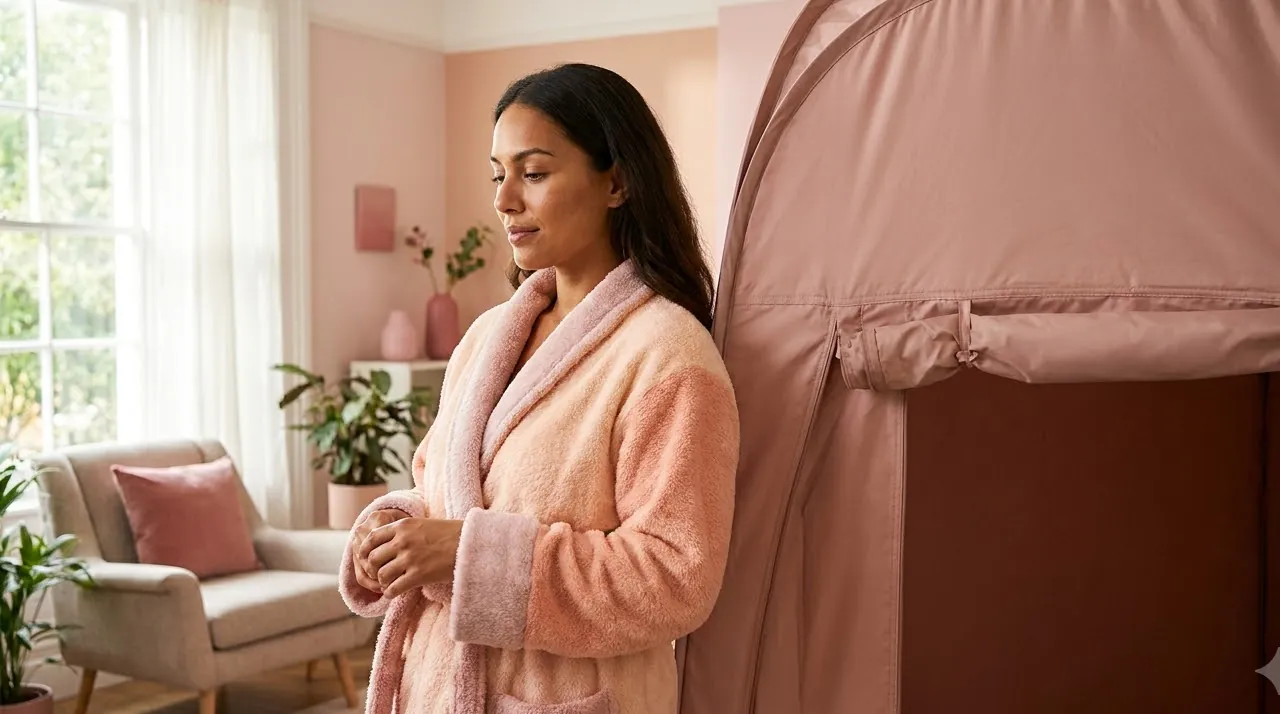
First Spray Tan Tips: Frequency, Etiquette & What to Expect
First spray tan? A day-by-day timeline, what to wear, when to shave and rinse, how often to re-tan, and tipping etiquette - from an LA tanning artist.
Please note that our map is approximate, please contact us for the exact info and pricing. All area prices are approximate. Please contact us for the exact pricing. We provide mobile tanning services in all major LA areas:
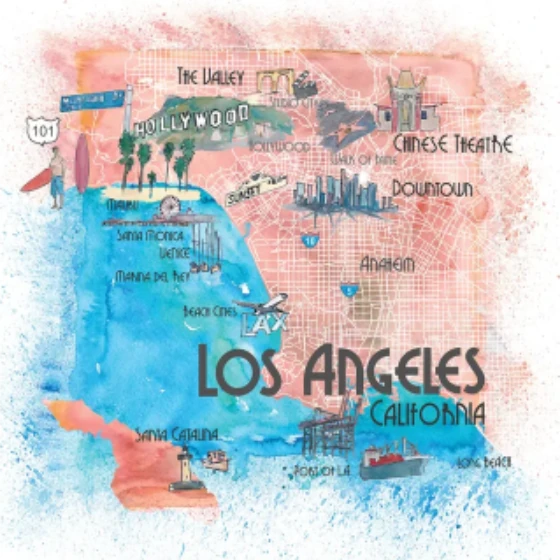
Please note that our map is approximate, please contact us for the exact info and pricing. All area prices are approximate. Please contact us for the exact pricing. We provide mobile tanning services in all major LA areas:
- Beverly Hills
- Beverly wood
- Calabasas
- Culver City
- Malibu
- Marina del Rey
- Miracle mile
- Pacific Palisades
- Santa Monica
- Sherman Oaks
- Studio City
- Venice
- Bel Air
- Brentwood
- Hollywood
- West Hollywood
- Mar Vista
- Pico — Robertson
- Westwood